.png?width=500&height=150&name=Your%20paragraph%20text%20(500%20x%20150%20px).png "TanyaByte")
How to Build Successful Influencer Marketing Campaigns in Gaming
Gamer Community Influencer & Creator Marketing Gaming Marketing Dec 14, 2025 12:54:53 PM TanyaByte 8 min read
Introduction: Why Gaming Influencer Campaigns Require a Different Approach
Influencer marketing campaigns in gaming cannot be treated like traditional influencer campaigns in other industries. Gaming audiences are highly perceptive, deeply community-driven, and quick to reject campaigns that feel forced, overly commercial, or disconnected from gaming culture. As a result, successful influencer marketing in gaming requires more than selecting popular creators and distributing branded talking points.
At its core, gaming influencer marketing is about trust, participation, and shared experience. Players want to see how a game fits into real gameplay, how a product performs under real conditions, and whether a creator genuinely enjoys what they are promoting. Campaigns that respect these expectations are far more likely to succeed than those that rely on rigid scripts or aggressive calls to action.
This article explores how brands can build effective influencer marketing campaigns in gaming, from planning and creator alignment to execution and optimisation. As part of a wider topic cluster on influencer marketing in gaming, this guide builds on the influencer and platform insights covered in previous cluster blogs and connects directly back to the pillar content.
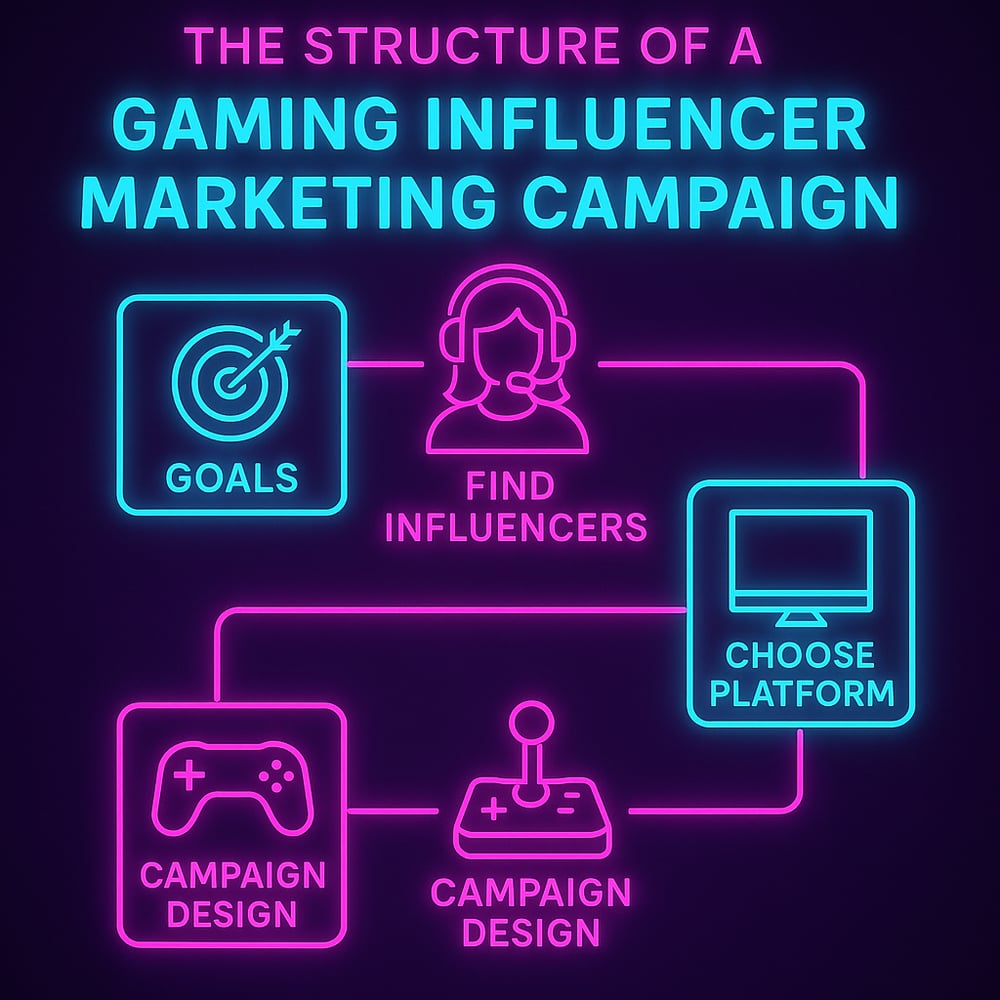
Step One: Defining Clear Campaign Goals
Every successful influencer campaign begins with clear objectives. In gaming, campaign goals typically fall into several categories, including awareness, engagement, community growth, or conversion. Without a defined goal, it becomes difficult to select the right influencers, platforms, or metrics.
Common goals for gaming influencer campaigns include:
-
Introducing a new game or product
-
Driving interest ahead of a launch
-
Increasing player engagement or retention
-
Building brand trust within gaming communities
Brands should resist the temptation to pursue multiple objectives simultaneously, particularly in early campaigns. Focused goals lead to clearer messaging and stronger results.
Step Two: Aligning Influencers With Brand and Game Identity
Influencer selection is one of the most critical steps in campaign development. As discussed in Blog 2: Types of Gaming Influencers and How Brands Should Work With Them, not all creators are suitable for every campaign.
Successful campaigns prioritise alignment over reach. This includes alignment in:
-
Game genre or product relevance
-
Audience demographics
-
Creator personality and values
-
Content style and tone
When creators genuinely enjoy the game or product, their enthusiasm translates naturally into content. Conversely, misaligned partnerships often feel forced and can damage both brand and creator credibility.
Step Three: Choosing the Right Platforms for Campaign Execution
Platform choice plays a major role in shaping how a campaign is experienced by audiences. As explored in Blog 3: Best Platforms for Influencer Marketing in Gaming, each platform offers different strengths and limitations.
For example:
-
Twitch excels at live engagement and authenticity
-
YouTube supports long-form storytelling and discoverability
-
TikTok drives fast-paced discovery and trends
-
Discord fosters long-term community engagement
Campaigns should be designed for the platform, not simply distributed across it. This means adapting messaging, content length, and interaction style to fit platform norms rather than repurposing identical content everywhere.
Step Four: Designing Campaign Formats That Feel Native
One of the most common mistakes brands make in gaming influencer marketing is forcing creators into unnatural content formats. Gaming audiences value authenticity and quickly recognise content that feels scripted or overly promotional.
Effective campaign formats include:
-
Sponsored gameplay sessions
-
First-look or early-access streams
-
Creator-led challenges or events
-
Long-term partnerships integrated into regular content
Rather than focusing on brand messaging alone, campaigns should prioritise player experience. Showing how a game plays, how a product performs, or how a service fits into gameplay is far more effective than direct promotion.
Step Five: Allowing Creative Freedom While Maintaining Brand Guidelines
Creative freedom is essential in gaming influencer marketing. Creators understand their audiences better than any external brand or agency, and campaigns perform best when influencers are trusted to communicate in their own voice.
That said, creative freedom does not mean a lack of structure. Brands should provide:
-
Clear campaign objectives
-
Key messaging themes
-
Disclosure and compliance requirements
By balancing guidance with flexibility, brands can ensure consistency while preserving authenticity. Overly restrictive briefs often lead to content that feels unnatural and disengaging.
Step Six: Timing and Momentum in Gaming Campaigns
Timing is particularly important in gaming influencer campaigns. Launch windows, updates, seasonal events, and community trends all influence how content is received.
For example:
-
Launch campaigns benefit from coordinated creator schedules
-
Live events perform best during peak viewing times
-
Community campaigns require sustained engagement
Brands should consider pacing campaigns to maintain momentum rather than relying on one-off activations. Staggered content releases can help extend visibility and engagement over time.
Step Seven: Community Engagement Beyond the Content
Successful gaming influencer campaigns do not end when content goes live. Community interaction plays a major role in shaping campaign perception.
Creators often engage with audiences through:
-
Live chat interaction
-
Comment responses
-
Community polls or Q&A sessions
Brands should support and encourage this engagement rather than treating influencer content as a static advertisement. Community-driven interaction reinforces trust and deepens player connection to the brand.
Step Eight: Managing Risks and Maintaining Transparency
Transparency is critical in gaming influencer marketing. Audiences expect creators to disclose partnerships clearly, and failure to do so can result in backlash and loss of trust.
Brands should ensure:
-
Clear sponsorship disclosures
-
Honest creator opinions
-
Ethical campaign practices
Additionally, brands should be prepared for feedback — both positive and negative. Gaming communities value open dialogue, and acknowledging criticism respectfully can strengthen credibility.
Common Campaign Mistakes in Gaming Influencer Marketing
Despite best intentions, brands often make avoidable mistakes when building gaming influencer campaigns. Common issues include:
-
Prioritising reach over relevance
-
Over-scripting creator content
-
Ignoring platform culture
-
Treating influencer campaigns as short-term ads
Avoiding these mistakes requires patience, research, and a genuine respect for gaming culture.
How Campaign Strategy Connects to Performance Measurement
Campaign execution and performance measurement are closely linked. Without clear objectives and structured execution, evaluating success becomes difficult.
The next cluster topic explores this connection in detail, examining how brands can measure ROI, engagement, and long-term impact in gaming influencer marketing.
Conclusion: Great Campaigns Respect Gaming Culture
Building successful influencer marketing campaigns in gaming requires more than budget or reach. It requires an understanding of gaming culture, trust in creators, and a commitment to authentic engagement.
Brands that approach influencer marketing as a collaborative partnership — rather than a transactional promotion — are far more likely to build lasting relationships with players and creators alike. As part of a broader influencer marketing strategy, thoughtful campaign execution is what transforms influencer partnerships into meaningful brand growth.
TanyaByte
Tanya is the founder of TanyaByte, a gaming-focused marketing brand built around creator-led growth and community-first strategy. With a deep understanding of gamer culture, Tanya helps brands work authentically with gaming influencers across streaming, social, and community platforms.